-
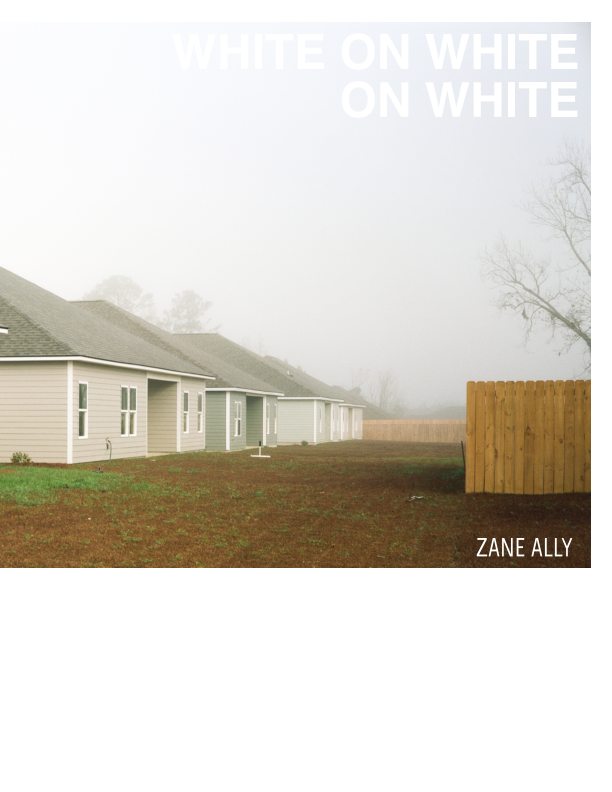
White On White On White
White on White on White by Zane Ally is a quiet, aching document of a Southern landscape suspended between construction and collapse. Shot on film in and around Valdosta and Lowndes County, Georgia, in the wake of Hurricane Helene, the series leans into an atmosphere of pale, milk-white fog that flattens depth and bleeds the color out of everything it touches — new vinyl siding, sod still seamed at its edges, raw pine fencing not yet weathered to gray. Ally's eye returns again and again to the repetition of freshly built subdivisions, their pyramidal rooflines marching into the mist like a false, sterile order, before the book pivots to the storm's aftermath: peeled-back roofs, a tarp cinched over a gutted house, a red-and-blue facade split open to its studs. Christmas inflatables and a wandering figure on a foggy road puncture the desolation with small, stubborn signs of continuing life. The grainy, muted palette and diffused light recall the deadpan tradition of American color documentary photography — think late Shore or Sternfeld filtered through humidity and grief — turning new construction and storm ruin into twin symptoms of the same fragile, provisional place. It's a restrained, elegiac book about impermanence dressed as permanence.
-

Icon
Icon strips Zane Ally's color film work down to its essentials. Photographed in and around Valdosta, Lowndes County, and the greater Southeast US, the book continues Ally's interest in finding singular, iconic frames within ordinary places, images that hold attention through tone and geometry. Icon reads less like a travelogue than a meditation on light, color, and the isolated moment.
-

Icon(s)
Icon(s) marks a shift in register for Zane Ally, trading the grain and shadow of black-and-white for the saturated warmth of color film. Photographed throughout Valdosta, Lowndes County, and the wider Southeast US, the collection reads as a search for everyday icons in our modern world. Ally's color work retains the same patient eye found in his black-and-white series, but here light and pigment do the work that shadow once did. It's a book that trusts color film's particular chemistry, its gentle shifts, faint grain, and slightly imperfections.
-
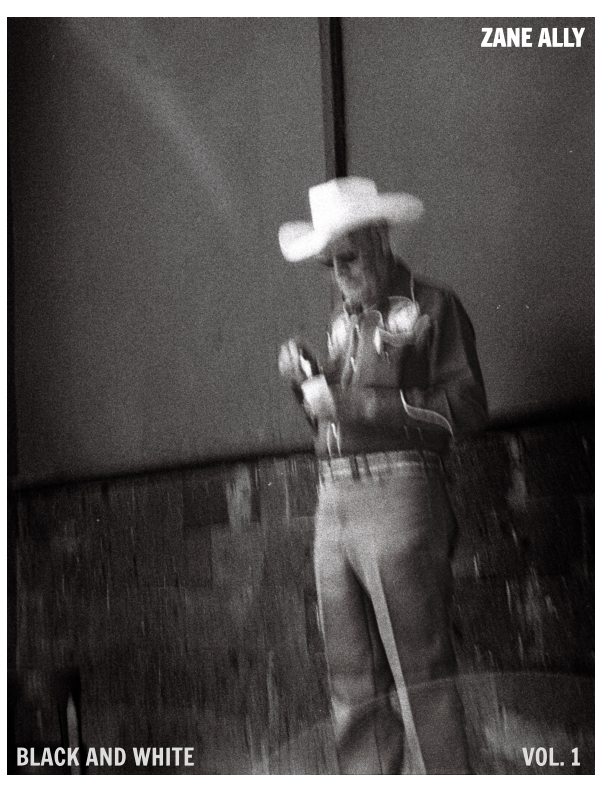
Black and White Volume 1
Black and White Volume 1 opens Zane Ally's film photography series with a rawer, more kinetic energy than its companion volumes. The cover image, a cowboy-hatted figure caught mid-gesture against a weathered wall, motion-blurred and streaked with stray light, has the loose, unguarded feel of a snapshot pulled straight from the darkroom, closer to the vernacular tradition of candid film portraiture than to posed documentary work. Shot throughout Valdosta, Lowndes County, the surrounding Southeast US, and Mexico, the volume leans into the imperfections that only analog film can produce: blur, grain, and the occasional light leak. Where later volumes in the series settle into stiller, more composed frames, this first installment feels immediate and improvisational, a photographer working close to his subjects. It's a fitting, gritty entry point into Ally's ongoing black-and-white portrait of the rural South.
-
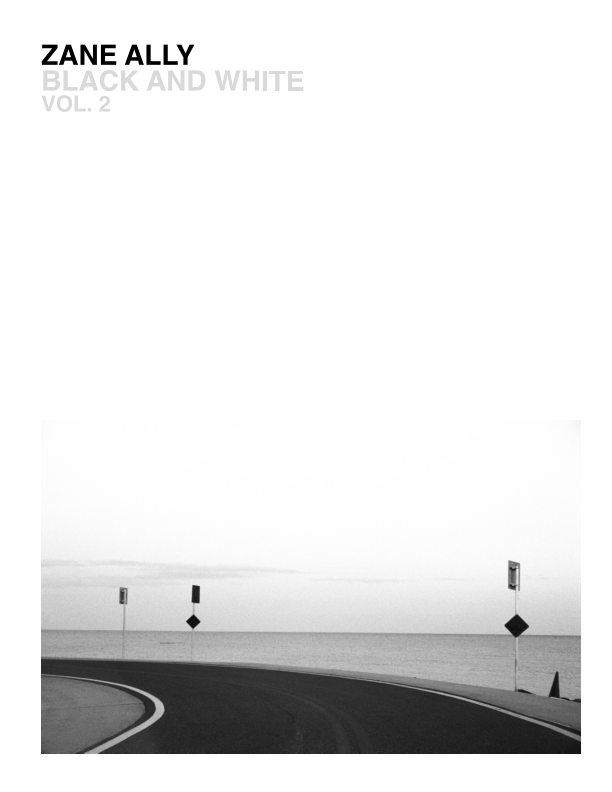
Black and White Volume 2
Black and White Volume 2 continues Zane Ally's ongoing study of the Southeast through the lens of classic black-and-white film, this time turning toward open roads, coastlines, and the negative space between things. Shot in and around Valdosta, Lowndes County, and the broader Southeast US, the work leans into film's natural tonal range, deep blacks, silvery mid-tones, and a soft grain, favoring quiet, minimal compositions over dense detail. It's a spare, contemplative volume, less about dramatic subject matter than about stillness, horizon lines, and the patient discipline of black and white.
-
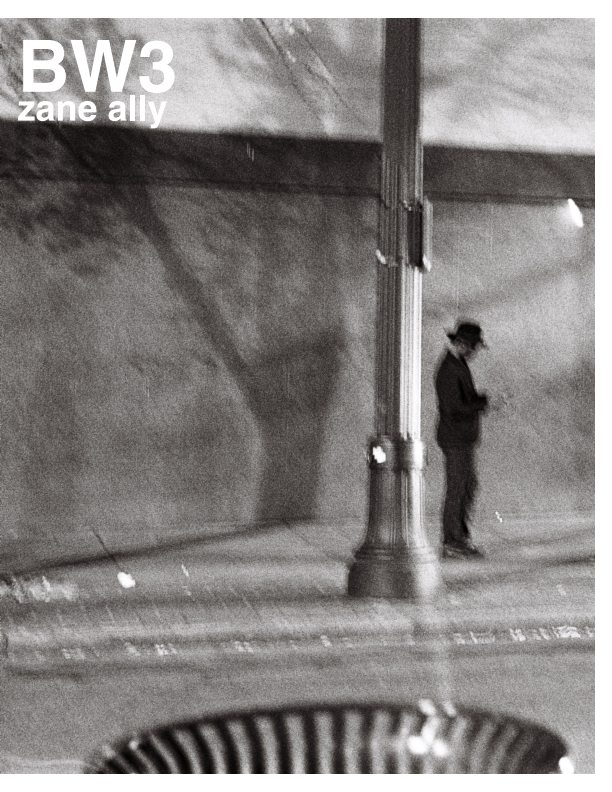
Black and White 3
BW3 is a quiet, deliberate collection of black-and-white film photographs drawn from the streets and back roads of Valdosta and Lowndes County, Georgia, with detours through the wider Southeast. Shot on film, the images carry the medium's inherent honesty: visible grain, soft light leaks, and the faint scratches of the negative itself become part of the composition rather than flaws to be corrected. The cover image sets the tone, a lone, hatted figure caught beneath a lamppost, dwarfed by the long shadow of a tree thrown across a blank wall, evoking the solitary, noir-inflected mood of classic mid-century street photography. Ally works in the tradition of observational documentarians, favoring stillness, shadow, and incidental detail over spectacle, finding in ordinary Southern scenes. It's a small-format publication, more a photographic sketchbook that rewards patient looking with the tactile texture only film can produce.